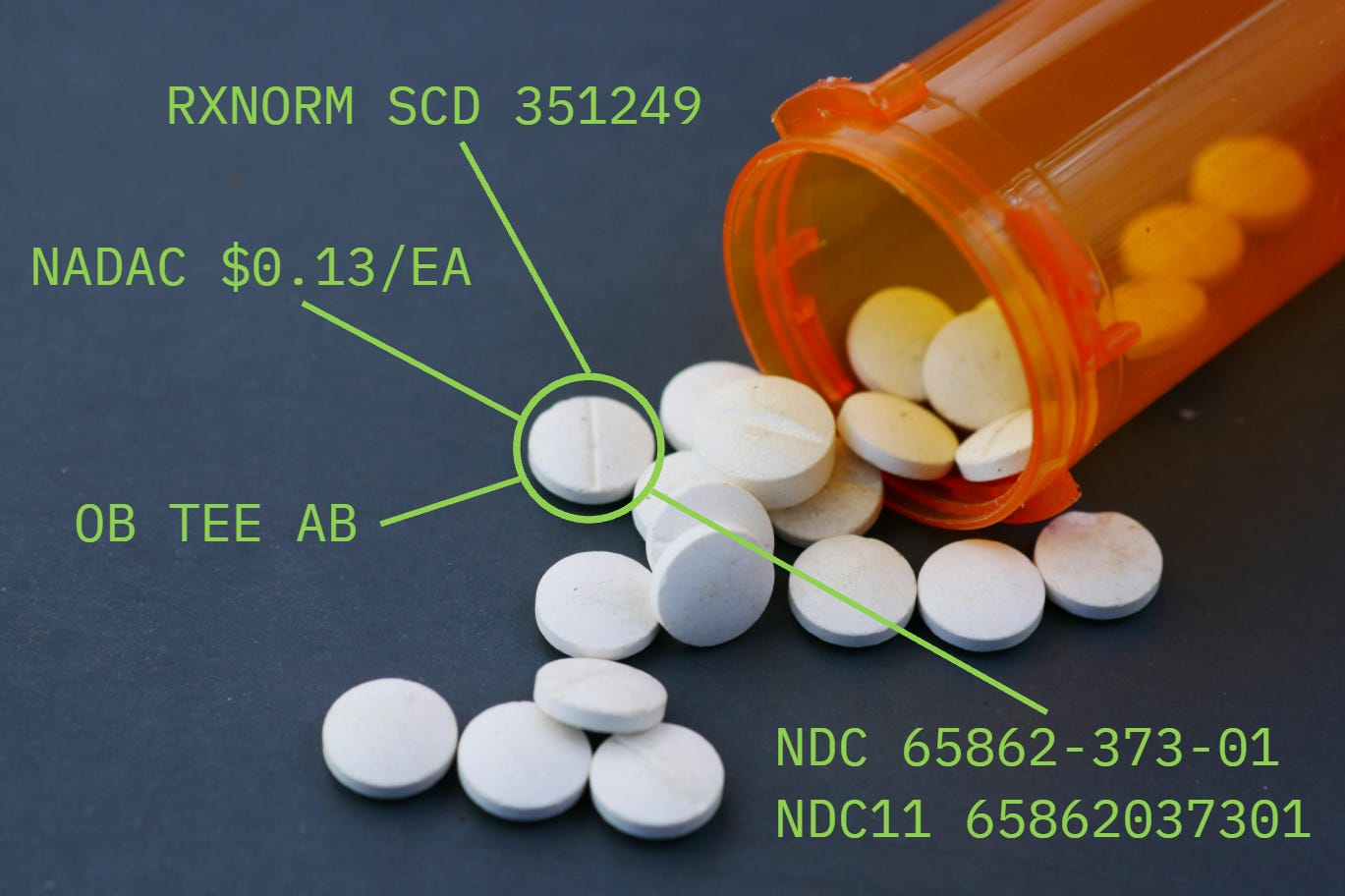
The hidden dependency in drug pricing transparency

· 5 min read

Joey LeGrand
Founder, CodeRx

Why transparent drug pricing relies on proprietary pack size data

Last week, a pharmacy manager called me with what seemed like a simple question: "How can I compare the prices I'm paying to NADAC to see where I might be overpaying?" It's a reasonable request—NADAC (National Average Drug Acquisition Cost) exists to provide transparent pricing benchmarks, and this pharmacy contributes their own purchase data to the system. Surely they should be able to use it for internal analysis, right?
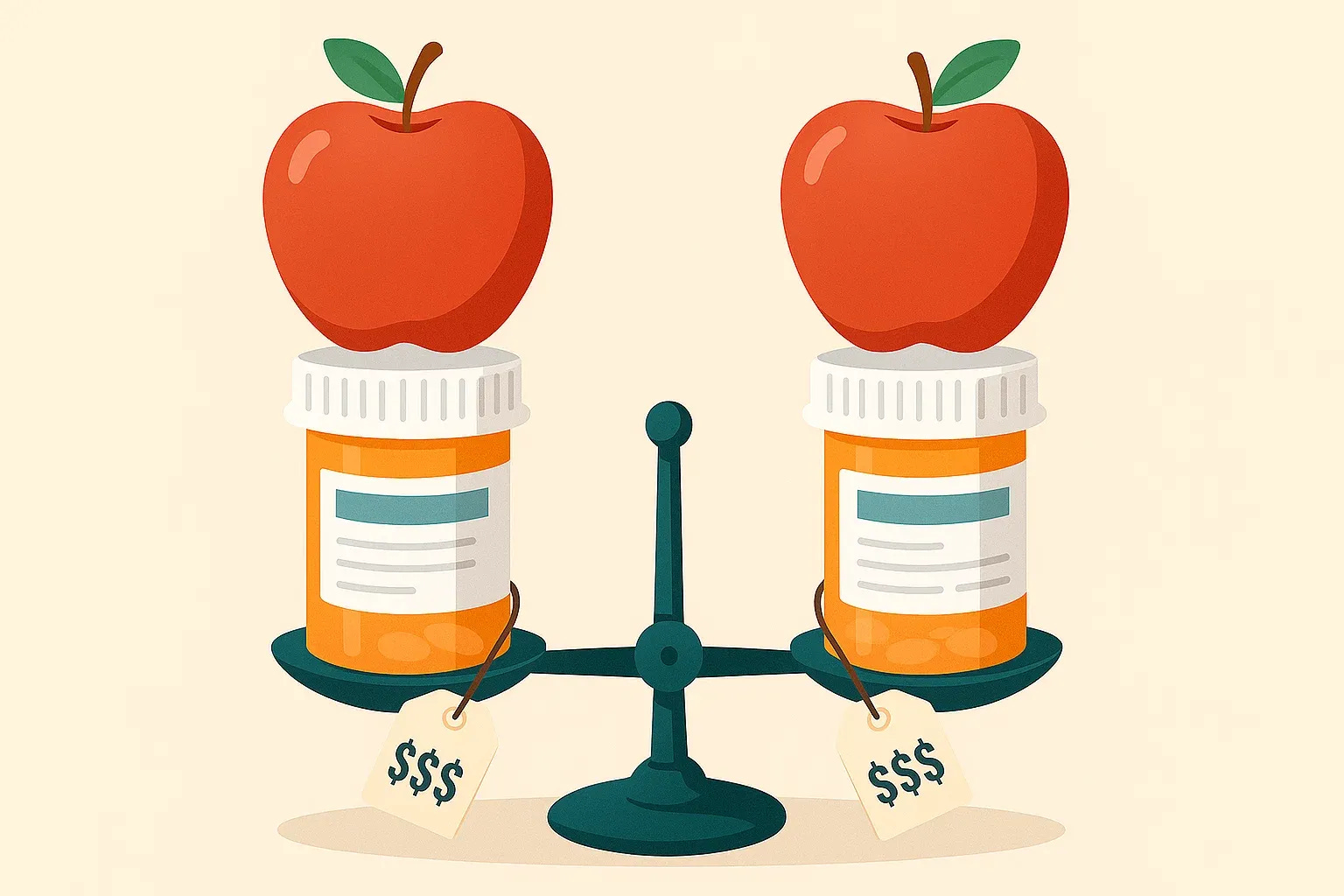

Comparing Advils to Advils. OK I know Advil probably wouldn't be in a prescription vial, but work with me here…

Working with drug product data

· 7 min read
Joey LeGrand
Founder, CodeRx

Drug products are a concept foundational to working with drug data in almost any capacity. They are the hub around which many types of analyses pertinent to pharmacy and the medication use process are organized. Drug information databases all have their own proprietary way of working with drug products, but the fundamental concepts are all the same. In this article, we explain those fundamental concepts in plain English and connect them with open standard identifiers.

Drug products can be both the concept of and physical manifestation of a medication that a patient could take.

The problem with drug information

· 7 min read
Joey LeGrand
Founder, CodeRx

The unfair choice between not easy to use and not easy to afford.

I remember years ago hearing for the first time that in order to know how much drugs cost, people had to pay for a license to a drug information provider. And I don't mean "how much do drugs cost with a GoodRx coupon" — I mean how much does it generally cost a pharmacy to purchase a bottle of a specific medication product.

Drug pricing information

What information can you get from open drug data?

· 4 min read
Joey LeGrand
Founder, CodeRx

More than you might think...

Open drug data is a powerful resource for healthcare, pharmacy, and research professionals. While it has some gaps, it serves as a foundation for innovation, providing key insights without the barriers of proprietary systems. With the right tools to fill in these gaps, open drug data can rival — and even surpass — commercial databases in accessibility, interoperability, and fostering innovation.

What's this pill?

The elusiveness of drug package size data

· 7 min read
Joey LeGrand
Founder, CodeRx

It's weirdly hard to know how much drug product is inside a given drug package. We dive into why it's challenging and how we plan to make it a lot easier.

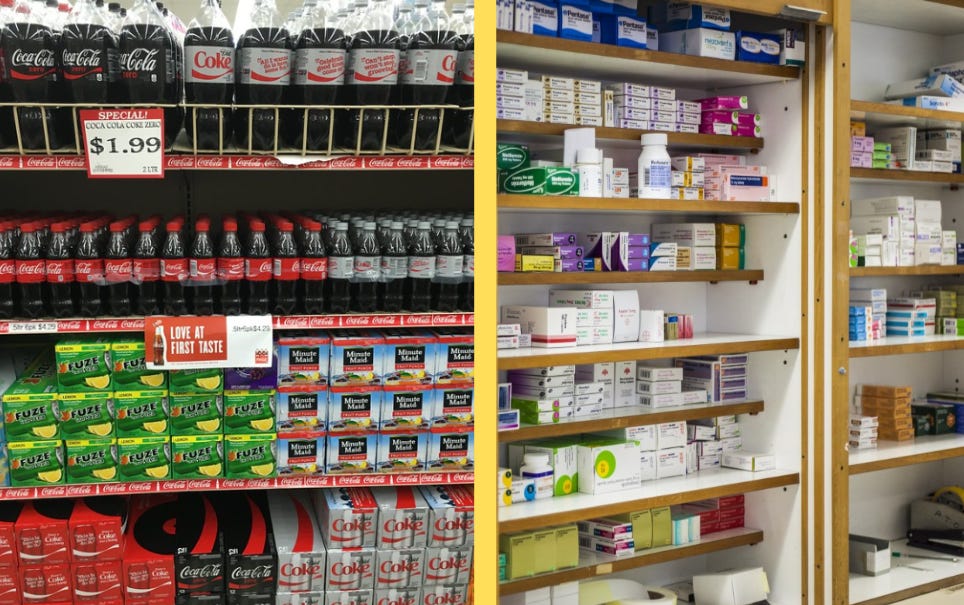
Just like you can buy different package sizes of, say, pop at the grocery store (yes - I call it pop - I'm originally from the Midwest), pharmacies can also stock different package sizes of drugs. Just like pop comes in 12 or 24 packs of 12 oz cans and also single 20 oz or 2 liter bottles, drug products can come in varying package sizes. The same oral solid drug product from the same manufacturer could be available in say 100, 500, and 1000 count bottles. The same vaccine from the same manufacturer can come in multi-dose 5 mL vials, or pre-filled 0.5 mL syringes - each with perhaps the option of buying a 1 or 10 pack.

Grocery store shelves are not terribly dissimilar from pharmacy shelves. Different products from different manufacturers with different pack sizes.

Open does not mean easy when it comes to drug data

· 7 min read
Joey LeGrand
Founder, CodeRx

Sometimes you get what you pay for. Sometimes the alternative is too expensive.

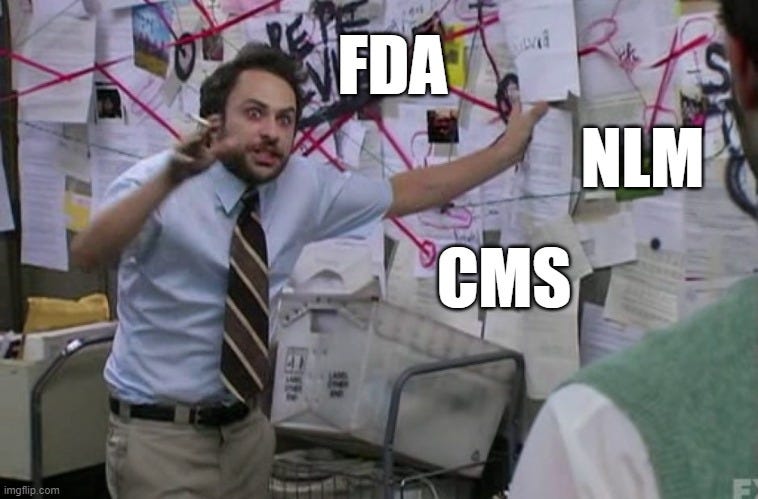
For the past year or so, we've been going down rabbit holes discovering more and more sources of open drug data, each with its own differences and quirks. By "drug data" we mean data about drugs - typically (but not only) from US government sources like the Food and Drug Administration (FDA), National Library of Medicine (NLM), and Centers for Medicare and Medicaid Services (CMS). These organizations do a reasonably good job at presenting and sharing their own siloed data; however, they all seem to use different data formats, structures, and update frequencies.

You would have to be some weird combination of data scientist, software engineer, and clinician to sustainably aggregate and combine data from these sources in a meaningful way.

Luckily we are.

An actual image of me trying to explain to someone what I've been working on for the past year.

Restructuring RxNorm for humans

· 4 min read
Joey LeGrand
Founder, CodeRx

RxNorm is an invaluable resource created and maintained by the National Library of Medicine (NLM). It is a standard nomenclature to represent drug products, providing semantic interoperability across many different drug vocabularies and fueling medication-related clinical decision support. However, the way the data within RxNorm is structured is pretty abstract and really difficult to understand without spending several hours reading various different pages of documentation on NLM's website.

For instance, take a look at the three RxNorm database tables below and tell me how you would find all of the national drug codes (NDCs) for all of the clinical drug products that contain lisinopril as an ingredient. Bet you can't figure it out without reviewing at least 4 different NLM sources of documentation.

  1. RxNorm Technical Documentation
  2. RxNorm Term Types
  3. RxNorm Relationships
  4. RxNorm Attributes

The three tables available in the RxNorm Current Prescribable Content release.